Every successful DIY project starts with the right tools and workshop setup. Whether someone is building furniture, fixing household items, or tackling home renovations, having quality equipment makes all the difference. A well-organized workshop saves time and reduces frustration. It also makes projects safer and more enjoyable.
This guide covers the essential tools and workshop strategies that every DIY enthusiast needs. From hand tools to power equipment, organization tips to safety practices, these recommendations will help anyone create a functional and efficient workspace.
Table of Contents
ToggleKey Takeaways
- A well-organized workshop saves time, reduces frustration, and makes DIY projects safer and more enjoyable.
- Start with essential hand tools like tape measures, saws, hammers, and screwdrivers before investing in power equipment.
- A cordless drill is the most versatile power tool for any workshop, handling drilling, driving screws, and various attachments.
- Organize your workshop into functional zones (cutting, assembly, finishing, storage) to boost productivity and reduce wasted movement.
- Always prioritize safety with protective gear, proper lighting, and smart habits—injuries take far longer to heal than safety precautions take to follow.
- Buy quality tools over quantity; well-made tools and workshop equipment last decades with proper care.
Must-Have Hand Tools for Every Workshop
Hand tools form the foundation of any workshop. They don’t require electricity, rarely break down, and offer precise control for detailed work.
Measuring and Marking Tools
Accurate measurements prevent costly mistakes. A quality tape measure (25 feet minimum) handles most projects. A combination square checks angles and marks straight lines. Pencils and a utility knife round out the marking essentials.
Cutting and Shaping Tools
A set of sharp hand saws covers basic cutting needs. A crosscut saw handles lumber, while a hacksaw cuts metal and plastic. Chisels in various sizes shape wood and clean joints. Keep them sharp, dull tools cause accidents and poor results.
Fastening Tools
Hammers come in many styles. A 16-ounce claw hammer works for general use. Screwdrivers in both Phillips and flathead varieties are essential. Buy quality sets that won’t strip or break. Pliers, including needle-nose and slip-joint types, grip, twist, and pull materials.
Wrenches and Adjustable Tools
An adjustable wrench handles various bolt sizes. A socket set speeds up automotive and mechanical work. Allen keys (hex wrenches) work on furniture assembly and modern fixtures.
These hand tools cost less than power equipment. They last decades with proper care. Every workshop needs them before adding anything else.
Power Tools That Make a Difference
Power tools save time and effort on larger projects. They handle tasks that would exhaust anyone using hand tools alone.
The Essential Drill
A cordless drill ranks as the most useful power tool for any workshop. It drives screws, bores holes, and accepts dozens of attachments. Look for models with lithium-ion batteries and variable speed settings. An 18-volt or 20-volt drill handles most household and workshop tasks.
Circular Saw
This portable saw cuts lumber quickly and accurately. It replaces hand saws for long cuts in plywood and dimensional lumber. A 7¼-inch blade size remains the standard. Corded models deliver consistent power, while cordless versions offer portability.
Jigsaw
Jigsaws cut curves and irregular shapes that circular saws cannot manage. They work on wood, metal, and plastic with the right blade. Every workshop benefits from having one.
Sanders
Random orbital sanders smooth surfaces faster than hand sanding. They prepare wood for finishing and remove old paint. The random motion prevents swirl marks that other sanders leave behind.
Additional Power Tools
As projects grow in scope, consider adding:
- A miter saw for angled cuts
- A router for decorative edges and joinery
- An impact driver for heavy fastening
- A table saw for precise rip cuts
Buy power tools as projects demand them. Quality matters more than quantity in any workshop.
Organizing Your Workshop for Maximum Efficiency
A messy workshop wastes time and creates hazards. Good organization systems pay for themselves through increased productivity.
Wall Storage Solutions
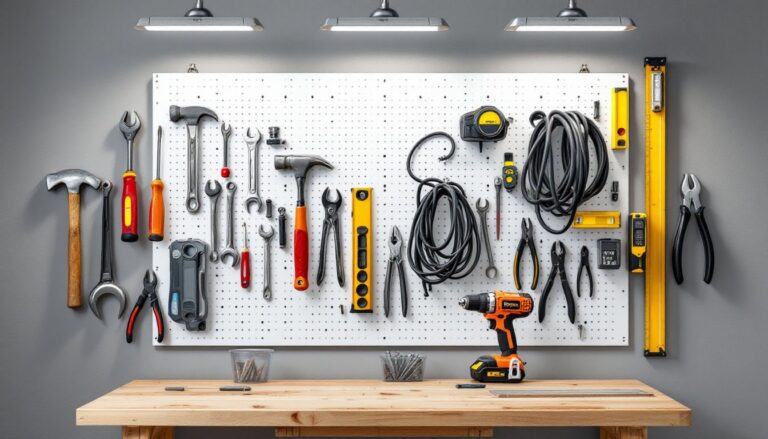
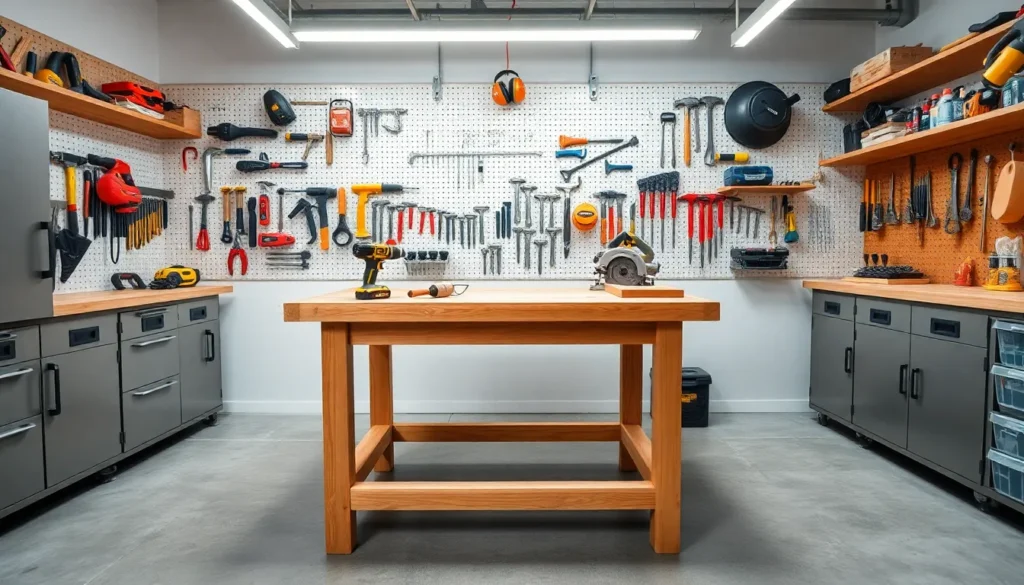
Pegboard remains a classic workshop organization tool. It keeps hand tools visible and accessible. French cleats offer a stronger alternative for heavier items. Tool racks and magnetic strips hold specific tools in place.
Workbench Considerations
The workbench serves as the heart of any workshop. It needs a flat, sturdy surface at a comfortable height. Most people work best with benches between 34 and 38 inches tall. Add a vise for holding work pieces steady. Drawers beneath the surface store frequently used items.
Cabinet and Shelf Systems
Closed cabinets protect tools from dust and moisture. Open shelves suit materials and supplies that see frequent use. Label everything. Clear bins reveal contents at a glance.
Zone Planning
Divide the workshop into zones by function:
- Cutting zone near saws and dust collection
- Assembly zone with clear bench space
- Finishing zone away from sawdust
- Storage zone for materials and supplies
This approach keeps related tools together. It reduces walking back and forth during projects.
Lighting
Good lighting prevents mistakes and reduces eye strain. LED shop lights provide bright, even illumination. Task lighting at the workbench highlights detailed work.
Safety Essentials and Best Practices
Workshop injuries happen fast and can cause permanent damage. Safety equipment and smart practices prevent most accidents.
Personal Protective Equipment
Safety glasses protect eyes from flying debris. Every workshop needs multiple pairs available. Hearing protection matters around power tools, damage accumulates over time. Work gloves guard hands during material handling but should come off around spinning tools. A dust mask or respirator prevents lung damage from fine particles.
Fire Safety
Keep a fire extinguisher rated for multiple fire types (ABC rated) within reach. Sawdust and finishing products ignite easily. Clean up sawdust regularly. Store oily rags in metal containers, they can spontaneously combust.
Electrical Safety
Inspect cords for damage before each use. Don’t daisy-chain extension cords. Install GFCI outlets in workshop areas. Unplug tools before changing blades or bits.
General Best Practices
These habits prevent common workshop accidents:
- Never work tired or distracted
- Keep the floor clear of clutter
- Secure work pieces before cutting
- Push wood past saw blades, never pull
- Read tool manuals and follow guidelines
- Keep a first aid kit stocked and accessible
Safety takes seconds. Injuries take weeks or months to heal. The trade-off always favors caution.