Starting a workshop from scratch can feel overwhelming. There are hundreds of tools on the market, and every YouTube woodworker seems to have a different “must-have” list. The good news? A beginner doesn’t need everything, just the right foundation.
This guide covers tools and workshop essentials for beginners who want to build, fix, and create without wasting money on gear they’ll never use. From hand tools to power tools, workspace setup to safety gear, this article breaks down exactly what to buy first and how to do it smartly.
Table of Contents
ToggleKey Takeaways
- A complete tools and workshop setup for beginners costs $500–$800 when purchased strategically, covering hand tools, power tools, and safety gear.
- Start with essential hand tools like a claw hammer, screwdriver set, tape measure, and utility knife—they cost under $150 and build foundational skills.
- Three must-have power tools for beginners are a cordless drill/driver, circular saw, and random orbital sander, handling 80% of home projects.
- Set up your workshop space with a sturdy workbench, wall-mounted pegboard storage, and bright LED lighting for comfort and efficiency.
- Safety gear including impact-rated glasses, hearing protection, and a dust mask costs under $50 and is essential for every workshop session.
- Buy mid-tier power tool brands and shop holiday sales to get quality tools and workshop equipment without overspending.
Essential Hand Tools Every Beginner Needs
Hand tools form the backbone of any workshop. They’re affordable, quiet, and teach fundamental skills that power tools can’t replace. Here’s what every beginner should own:
A quality hammer is non-negotiable. A 16-ounce claw hammer handles most tasks, driving nails, light demolition, and prying boards apart. Look for a fiberglass or steel handle for durability.
Screwdrivers come next. Buy a set that includes both Phillips and flathead in multiple sizes. Magnetic tips save frustration when working in tight spaces.
Tape measure and combination square are essential for accurate cuts. A 25-foot tape measure covers most projects. The combination square checks 90-degree angles and marks straight lines.
Adjustable wrench and pliers handle nuts, bolts, and gripping tasks. A 10-inch adjustable wrench and a pair of slip-joint pliers cover 90% of needs.
Utility knife cuts cardboard, drywall, rope, and dozens of other materials. Get one with replaceable blades.
Hand saw remains useful even after buying power saws. A crosscut saw with 10-12 teeth per inch makes clean cuts in wood without electricity.
These tools and workshop basics cost under $150 total and will last years with proper care.
Must-Have Power Tools to Start Your Collection
Power tools speed up work dramatically. But beginners don’t need a garage full of machinery. Start with these three:
Cordless drill/driver tops every list for good reason. It drills holes, drives screws, and handles dozens of attachments. An 18V or 20V model with two batteries provides enough power for home projects. This single tool replaces hours of manual work.
Circular saw cuts lumber, plywood, and sheet goods quickly. A 7¼-inch blade handles standard 2x4s and plywood sheets. Many beginners skip the table saw entirely and rely on a circular saw with a straight-edge guide for years.
Random orbital sander makes finishing projects far easier. Hand sanding works, but it’s slow and inconsistent. A 5-inch orbital sander smooths surfaces in minutes rather than hours.
These three power tools and workshop additions cost between $200-$400 for decent quality. They handle 80% of beginner projects, furniture repairs, shelving, picture frames, deck work, and basic woodworking.
Skip the specialty tools until specific projects demand them. That router, miter saw, or jigsaw can wait.
Setting Up Your First Workshop Space
A workshop doesn’t require a dedicated building. Garages, basements, spare rooms, and even outdoor sheds work fine.
Workbench serves as command central. A solid, flat surface at waist height prevents back strain and provides stability for cutting, drilling, and assembly. Beginners can build a simple workbench for under $100 in materials or buy a portable folding bench.
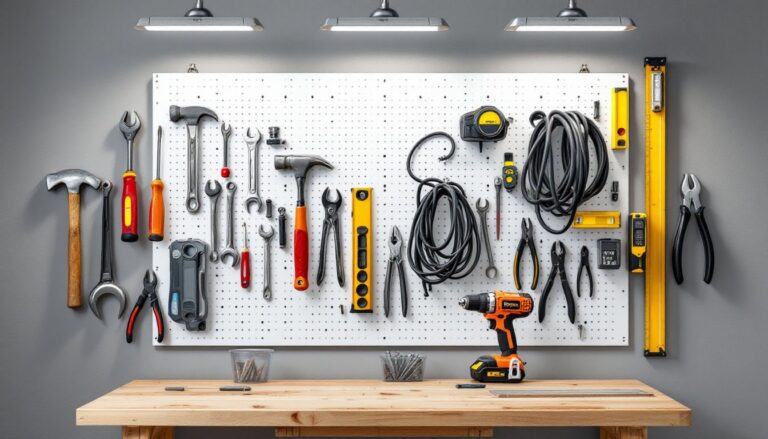
Storage keeps tools organized and accessible. Pegboard mounted on walls displays hand tools within reach. Shelving units hold power tools, supplies, and project materials. Labeled bins contain screws, nails, and small hardware.
Lighting matters more than people realize. Poor lighting causes mistakes and eye strain. Install overhead LED shop lights, they’re cheap and bright. A clamp-on task light adds focused illumination where needed.
Electrical access supports power tools. Ensure the space has enough outlets. A power strip with surge protection keeps tools and chargers organized. Extension cords rated for power tools prevent tripped breakers.
Floor space should allow movement around projects. Clear at least a 10×10 foot area for comfortable work. Leave room for material storage and tool access.
A functional tools and workshop setup doesn’t require thousands of dollars, just smart planning.
Safety Gear and Best Practices
Power tools spin, cut, and grind at high speeds. Hand tools slip. Wood splinters. Safety gear isn’t optional, it’s required.
Safety glasses protect eyes from flying debris. Wear them every time a saw, drill, or sander runs. Impact-rated glasses cost $10 and prevent life-changing injuries.
Hearing protection matters during extended power tool use. Foam earplugs work fine. Over-ear muffs block more noise and slip on faster.
Dust mask or respirator filters sawdust and particles. N95 masks handle light sanding. A half-face respirator with P100 filters suits heavier dust work.
Work gloves protect hands during material handling. Remove them when operating spinning tools, gloves can catch and pull hands into machinery.
Best practices keep workshops safe:
- Read tool manuals before first use
- Unplug power tools before changing blades or bits
- Keep blades and bits sharp, dull tools require more force and slip more often
- Clamp workpieces securely before cutting
- Clean sawdust regularly to prevent fire hazards
- Never work tired, rushed, or distracted
Safety gear for a complete tools and workshop setup costs under $50 and prevents countless accidents.
Tips for Buying Quality Tools on a Budget
Quality tools last decades. Cheap tools break mid-project and create frustration. But beginners don’t need professional-grade equipment. Here’s how to buy smart:
Buy mid-tier brands for power tools. Names like Ryobi, Craftsman, and Ridgid offer solid performance at reasonable prices. Skip the cheapest options, but save professional brands (DeWalt, Milwaukee, Makita) for tools you’ll use daily.
Invest in hand tools that get heavy use. A quality hammer, tape measure, and screwdriver set last a lifetime. Cheap versions wear out quickly.
Shop sales and holidays for significant savings. Black Friday, Memorial Day, and Father’s Day bring major discounts on tools and workshop equipment. Sign up for email lists from home improvement stores.
Consider refurbished tools from manufacturer outlets. They’re inspected, repaired, and warrantied, often at 30-40% discounts.
Check estate sales and pawn shops for hand tools. Older American-made tools often surpass modern imports in quality.
Start with combo kits for power tools. A drill and circular saw kit costs less than buying each separately, and batteries are interchangeable.
A complete beginner tools and workshop setup runs $500-$800 when purchased thoughtfully. That investment supports years of projects.