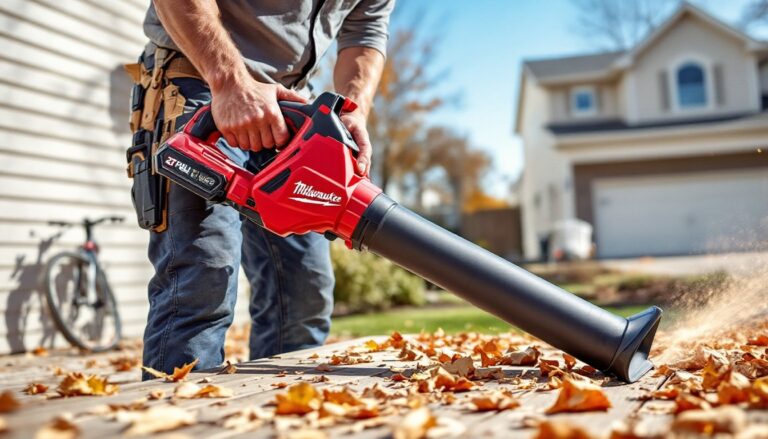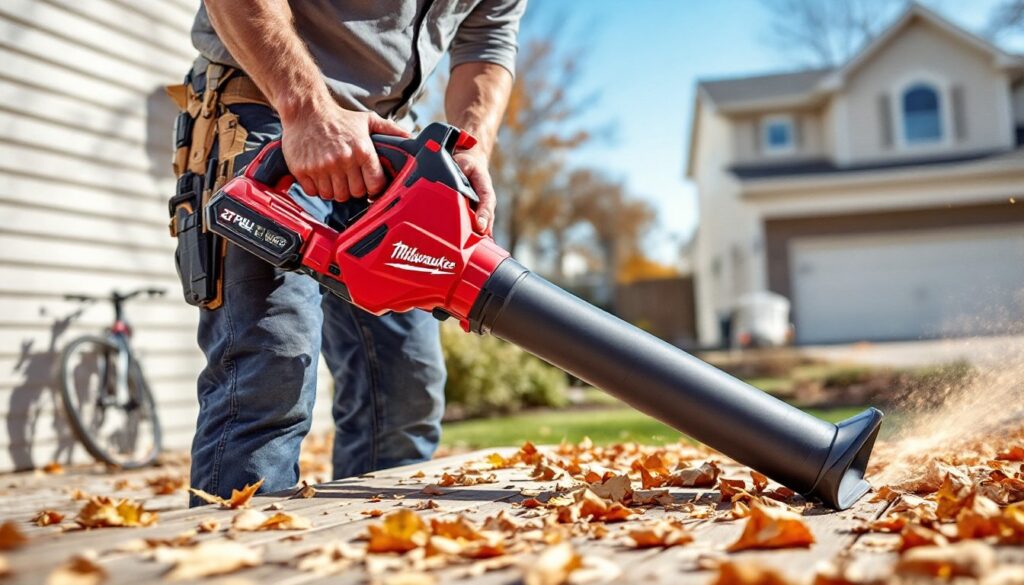
The Milwaukee 2724-20 M18 FUEL blower has carved out a reputation among contractors and serious DIYers who need cordless power without the noise and hassle of gas engines. As part of Milwaukee’s M18 ecosystem, it promises brushless efficiency, compact design, and enough airflow to clear jobsites, driveways, and decks. But does it deliver the performance needed for year-round debris management, or is it just another battery tool collecting dust in the garage? This review examines real-world performance, runtime, and practical use cases to help determine whether the 2724-20 earns its place in a tool lineup.
Table of Contents
ToggleKey Takeaways
- The Milwaukee 2724-20 M18 FUEL blower delivers 450 CFM and 120 MPH airflow with a brushless motor, making it ideal for jobsite cleanup, deck maintenance, and light to moderate residential debris management.
- Noise levels around 64 dB make the Milwaukee 2724-20 suitable for residential use and early-morning cleanups without violating noise ordinances, significantly quieter than gas-powered alternatives at 90+ dB.
- Runtime varies based on battery size—expect 18–22 minutes with a 5.0 Ah battery on variable speed or 25–30 minutes with an 8.0 Ah battery, requiring battery swaps for extended all-day use.
- The 2724-20’s M18 platform compatibility allows seamless battery and charger sharing across 200+ Milwaukee tools, maximizing value for contractors and DIYers already invested in the ecosystem.
- At 5.5 lbs, the lightweight design enables easy maneuvering, though arm fatigue may occur after 15–20 minutes of continuous use with larger batteries attached.
- The bare tool pricing ($129–$159) requires separate battery and charger investment ($150–$300+), making it most cost-effective for existing M18 users rather than those starting from scratch.
What Makes the Milwaukee 2724-20 Stand Out
The 2724-20 sits in the middle of Milwaukee’s blower lineup, not the compact handheld, not the backpack beast, but a handheld unit designed for versatility. It’s built around Milwaukee’s POWERSTATE brushless motor and REDLINK PLUS intelligence, which optimize power delivery and prevent overheating or over-discharge.
The blower features a variable-speed trigger with a lock-on button for continuous operation and a turbo button that kicks airflow into high gear when needed. The design includes a concentrator nozzle for focused airflow and an axial fan configuration that pulls air straight through the housing for maximum efficiency.
Unlike older cordless blowers that struggled with wet leaves or compacted debris, the 2724-20 generates enough velocity to handle tougher cleanup tasks. It’s also noticeably quieter than gas-powered alternatives, which matters on residential jobsites or early-morning cleanups where noise ordinances apply.
Key Specifications and Features
- Airflow: Up to 450 CFM (cubic feet per minute)
- Air Speed: Up to 120 MPH
- Weight (tool only): 5.5 lbs
- Motor Type: Brushless (POWERSTATE)
- Speed Control: Variable-speed trigger with turbo boost
- Noise Level: Approximately 64 dB at operator’s ear
- Compatibility: M18 battery platform (18V lithium-ion)
- Build: Impact-resistant polymer housing with rubberized grip
These numbers put the 2724-20 in the upper tier of handheld cordless blowers. For comparison, many consumer-grade battery blowers top out around 350 CFM, while gas handhelds typically range from 400 to 600 CFM. The 450 CFM output gives it enough muscle for professional use without crossing into backpack territory.
Performance Testing: Real-World Results
Testing the 2724-20 across different scenarios reveals where it excels and where it has limits. On hardscapes, concrete, asphalt, decking, the blower clears dry leaves, sawdust, and light debris with minimal effort. The variable-speed trigger allows operators to dial back power for precision work around flowerbeds or dial up for wide-open spaces.
With wet leaves and matted grass clippings, performance depends on technique. The turbo mode delivers enough velocity to break up clumps, but heavy, saturated material requires multiple passes. It won’t replace a rake for serious spring cleanup in shaded areas where leaves have been sitting all winter, but it handles typical post-mow cleanup without issue.
Jobsite debris, drywall dust, wood shavings, metal filings, is where the 2724-20 really shines. The concentrated nozzle focuses airflow into corners, under sawhorses, and along baseboards. Carpenters and remodelers report that it saves time compared to sweeping, especially on subfloors or rough decking where brooms snag.
One limitation: the 5.5-lb weight feels light at first, but after 15–20 minutes of continuous use with a high-capacity battery, arm fatigue becomes noticeable. It’s not a dealbreaker, but operators who plan to use it for extended sessions should consider taking breaks or switching hands.
Noise levels measured around 64 dB at the user’s ear, roughly equivalent to normal conversation. Gas blowers typically run 90+ dB, requiring hearing protection. The 2724-20 is quiet enough for residential use without annoying neighbors or violating local noise restrictions.
Battery Life and Runtime Expectations
Runtime varies significantly based on battery size and operating mode. Milwaukee’s M18 batteries range from 1.5 Ah compact packs to 12.0 Ah high-output (HO) batteries, and the 2724-20 accepts them all.
With a 5.0 Ah battery on variable speed (not turbo), expect around 18–22 minutes of runtime, enough to clear a typical two-car driveway and front walkway. Switch to turbo mode continuously, and runtime drops to approximately 10–12 minutes. That’s sufficient for quick jobsite cleanups but not all-day leaf management.
Upgrade to an 8.0 Ah or 12.0 Ah HO battery, and runtime extends to 25–30 minutes on variable speed, with turbo use stretching to 15–18 minutes. The larger batteries add noticeable weight, an 8.0 Ah battery adds roughly 1.5 lbs, and a 12.0 Ah adds over 2 lbs, which impacts handling comfort.
For professionals already invested in the M18 ecosystem, the ability to swap batteries across tools (drills, saws, lights, fans) means the blower integrates seamlessly into existing workflows. Keep a spare battery on the charger, and downtime is minimal.
Charging times with Milwaukee’s M18/M12 Rapid Charger are approximately:
- 5.0 Ah: ~60 minutes
- 8.0 Ah: ~90 minutes
- 12.0 Ah HO: ~120 minutes
The 2724-20 is sold as a bare tool (no battery or charger included), which keeps the price down for those already in the M18 platform but adds upfront cost for new users.
Best Use Cases for the 2724-20
The 2724-20 fits specific niches better than others. Here’s where it makes the most sense:
Jobsite Cleanup: Contractors who need to clear dust and debris between phases (framing to drywall, sanding to priming) benefit from the cordless convenience and focused nozzle. It’s faster than sweeping and doesn’t require an extension cord or generator.
Deck and Patio Maintenance: Clearing leaves, pollen, and dirt from composite or wood decking is quick work. The variable speed prevents blowing debris into gaps or damaging softer materials.
Garage and Workshop: Sawdust, metal shavings, and packaging debris clear easily. The blower’s compact size allows maneuvering around toolboxes, benches, and shelving.
Gutter Cleaning (from the ground): With the concentrator nozzle, operators can blow out loose debris from open gutters without climbing a ladder, though it won’t clear compacted muck or standing water.
Light Landscaping: Homeowners with small to mid-sized properties (under half an acre) can handle routine leaf and grass clipping cleanup. Pair with a second battery for larger areas.
Not ideal for:
- Large properties with heavy leaf fall: Gas backpack blowers or walk-behind units are more efficient.
- Commercial landscaping: Professionals running leaf crews all day need longer runtime and higher CFM.
- Wet, heavy snow removal: While some users report light dusting snow clears easily, the 2724-20 isn’t designed for snow management and lacks the power for anything beyond a trace amount.
Pros and Cons: Is It Worth the Investment?
Pros:
- Brushless motor delivers consistent power and longer tool life
- 450 CFM and 120 MPH provide strong performance for a handheld cordless unit
- Quiet operation (64 dB) won’t violate noise ordinances or require hearing protection
- M18 platform compatibility allows battery sharing across 200+ Milwaukee tools
- Lightweight (5.5 lbs tool-only) for easy maneuvering
- Variable-speed trigger plus turbo mode offers control and power on demand
- Durable polymer construction withstands jobsite abuse
Cons:
- Bare tool pricing requires separate battery and charger purchase (adds $150–$300+ depending on battery size)
- Runtime limitations with smaller batteries (10–20 minutes) mean frequent swaps for extended use
- Weight increases significantly with larger batteries, leading to arm fatigue
- Not powerful enough for large-scale landscaping or heavy wet debris
- No cruise control on variable-speed trigger (lock-on button only works at the speed set when engaged)
The 2724-20 makes the most financial sense for users already invested in Milwaukee’s M18 platform. For those starting from scratch, the upfront cost, typically $129–$159 for the bare tool, plus $99–$249 for a battery and charger kit, puts total investment at $230–$400+. Compare that to quality gas handheld blowers in the $180–$250 range, though those bring maintenance, fuel, and noise concerns.
For contractors who value cordless convenience, low noise, and integration with existing M18 tools, the investment pays off. Homeowners or casual users without M18 batteries might find better value in a kit bundle or a different platform.
Conclusion
The Milwaukee 2724-20 delivers reliable, cordless power for jobsite cleanup, deck maintenance, and light to moderate residential debris management. Its brushless motor, 450 CFM output, and M18 compatibility make it a practical choice for professionals and serious DIYers who prioritize quiet operation and tool ecosystem integration. While runtime and power won’t match gas backpack blowers, the 2724-20 fills the gap between lightweight handhelds and heavy-duty equipment, assuming users already own M18 batteries or are willing to invest in the platform.